

- 18 Nov 2026
A sudden fall, road accident or sports injury can cause serious damage to your bones, joints and surrounding tissues. While some injuries may appear minor initially, others require immediate medical attention to prevent complications and long-term mobility problems. Recognising the warning signs and seeking timely treatment can make a significant difference in recovery.
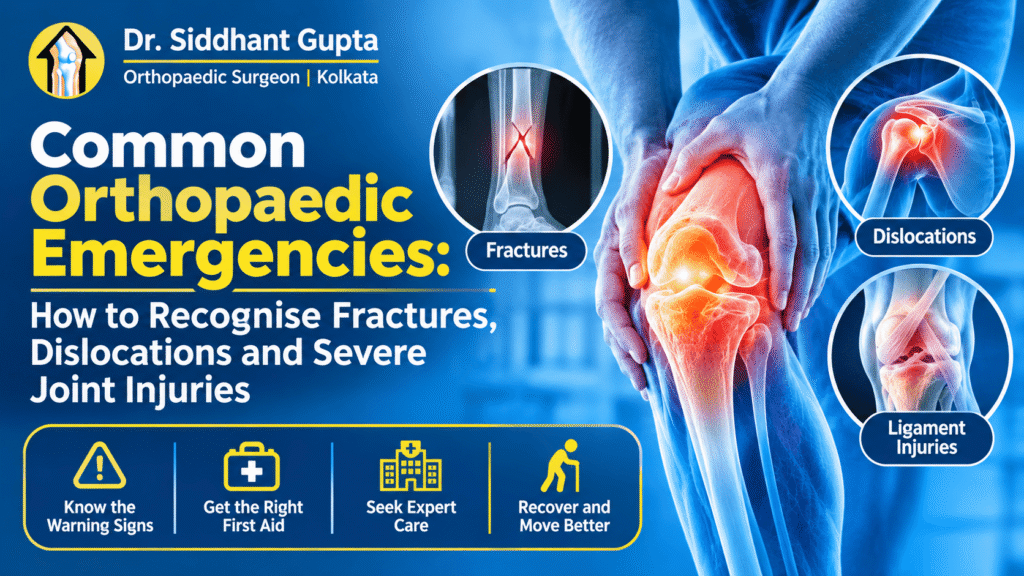
Common Orthopaedic Emergencies include bone fractures, joint dislocations, severe ligament injuries and other traumatic musculoskeletal conditions. Understanding these injuries, their symptoms and the right first-aid measures can help you make informed decisions during an emergency.
What Are Orthopaedic Emergencies?
Orthopaedic emergencies are injuries or conditions affecting bones, joints, muscles, ligaments and tendons that require urgent medical evaluation and treatment. They commonly occur due to road accidents, falls, workplace incidents and sports-related trauma.
Some injuries can damage nearby nerves and blood vessels, while others may lead to permanent joint instability or restricted movement if treatment is delayed. Prompt assessment by an experienced orthopaedic specialist helps identify the severity of the injury and determine the appropriate treatment.
Common Types of Orthopaedic Emergencies
1. Bone Fractures
A fracture occurs when a bone breaks or develops a crack due to excessive force, an accident or weakened bone structure. Fractures can affect the arms, legs, wrists, ankles, hips and other parts of the body.
Common types include:
- Closed fractures: The broken bone does not penetrate the skin.
- Open fractures: The broken bone is associated with an open wound, creating a serious risk of infection.
- Displaced fractures: The broken bone fragments move out of their normal alignment.
- Stress fractures: Small cracks develop due to repeated stress or overuse.
Common symptoms: Severe pain, swelling, bruising, visible deformity and difficulty moving or bearing weight on the affected limb.
Open fractures and fractures associated with circulation problems require immediate medical attention. Depending on the injury, treatment may involve casting, splinting or surgical fracture fixation.
2. Joint Dislocations
A joint dislocation occurs when the bones forming a joint are forced out of their normal position. It commonly affects the shoulder, elbow, hip, fingers and kneecap.
Dislocations may happen following a sudden fall, road accident or sports injury. A dislocated joint can also involve damage to surrounding ligaments, muscles, nerves and blood vessels.
Common symptoms include:
- Intense pain around the affected joint.
- Visible joint deformity.
- Swelling and bruising.
- Inability to move the joint normally.
- Numbness or tingling in the surrounding area.
A dislocated joint should never be forced back into position at home. Medical professionals must assess the injury and perform appropriate treatment to avoid further damage.
3. Severe Knee and Ligament Injuries
Knee injuries are common among athletes and physically active individuals. Sudden twisting movements, direct impacts and awkward landings can damage important structures within the knee.
Some serious injuries include:
- Anterior cruciate ligament (ACL) tears.
- Posterior cruciate ligament (PCL) injuries.
- Meniscus tears.
- Patellar dislocations.
- Multiple ligament injuries.
Symptoms may include sudden knee pain, swelling, instability, restricted movement and difficulty walking.
Severe knee injuries require proper clinical evaluation. Depending on the extent of damage, treatment may include immobilisation, physiotherapy or arthroscopic ligament reconstruction.
4. Sports and Road Accident Injuries
High-impact activities and road accidents can cause multiple orthopaedic injuries simultaneously. These may include fractures, shoulder dislocations, ankle injuries, pelvic fractures and severe soft tissue damage.
In some cases, the patient may experience internal bleeding, nerve injuries or compromised blood circulation. Therefore, a complete medical assessment is essential after significant trauma, even when external injuries appear limited.
Warning Signs That Require Immediate Medical Attention
Not every bone or joint injury is an emergency, but certain symptoms should never be ignored.
Seek immediate medical attention if you experience:
- Severe or increasing pain after an accident.
- Visible bone deformity or an abnormal joint position.
- An open wound with an exposed bone.
- Inability to stand, walk or move the affected limb.
- Sudden numbness, tingling or loss of sensation.
- A pale, bluish or unusually cold hand or foot.
- Rapid swelling following a serious injury.
- Severe injuries following a road accident or fall from height.
Important: A cold, pale or numb limb may indicate impaired blood circulation or nerve damage. This requires emergency assessment without delay.
What Should You Do Before Reaching the Hospital?
Taking the right first-aid measures can help prevent further damage while arranging medical care.
- Keep the injured area still: Avoid unnecessary movement of the affected bone or joint.
- Control bleeding: Apply gentle pressure around a bleeding wound with a clean dressing. Do not press directly on an exposed bone.
- Apply cold therapy: Use an ice pack wrapped in a towel to help reduce swelling. Never apply ice directly to the skin.
- Avoid self-treatment: Never attempt to straighten a deformed limb or reposition a dislocated joint.
- Seek emergency assistance: Arrange prompt medical evaluation, particularly after a major accident or when circulation or sensation is affected.
Avoid massaging the injured area or attempting to walk on a suspected fracture.
How Are Orthopaedic Emergencies Diagnosed and Treated?
The treatment approach depends on the type of injury, its severity and the structures affected.
Clinical Examination and Imaging
An orthopaedic specialist evaluates the injury by understanding how it occurred, assessing pain and swelling, and checking joint movement, sensation and blood circulation.
Diagnostic investigations may include:
- X-rays: Help identify fractures, bone alignment problems and joint dislocations.
- CT scans: Provide detailed images of complex fractures and certain joint injuries.
- MRI scans: Help identify ligament tears, meniscus injuries, cartilage damage and other soft tissue problems.
Non-Surgical and Surgical Treatment
Not every orthopaedic emergency requires surgery. Depending on the injury, treatment options may include:
- Casting, splinting and immobilisation.
- Closed reduction of dislocated joints by trained medical professionals.
- Fracture fixation using appropriate surgical techniques.
- Arthroscopic treatment for selected ligament and joint injuries.
- Physiotherapy and rehabilitation to restore strength and mobility.
Open fractures, unstable fractures, complicated dislocations and severe ligament injuries may require surgical intervention. Early diagnosis helps the specialist determine the most appropriate treatment plan.
When Should You Consult an Orthopaedic Surgeon in Kolkata?
If you or a family member experiences a serious bone, joint or sports injury, timely orthopaedic evaluation is essential. Delaying treatment can increase the risk of complications, prolonged recovery and permanent mobility problems.
Dr. Siddhant Gupta, an orthopaedic surgeon in Kolkata, provides evaluation and treatment for fractures, dislocations, sports injuries and other orthopaedic conditions.
Patients seeking Orthopaedic Emergency in Kolkata can contact Dr. Siddhant Gupta for urgent assistance and information about available treatment facilities.
Frequently Asked Questions (FAQs)
1. What are the most common orthopaedic emergencies?
Common orthopaedic emergencies include bone fractures, joint dislocations, severe ligament injuries, open fractures and traumatic knee, shoulder and hip injuries.
2. How do I know if a fracture requires emergency treatment?
Severe pain, visible deformity, an open wound, significant swelling or inability to bear weight may indicate a serious fracture. Suspected fractures should be medically assessed promptly.
3. Can a dislocated joint heal without treatment?
A dislocated joint requires medical assessment and appropriate repositioning. Leaving it untreated can damage surrounding nerves, blood vessels, cartilage and ligaments.
4. Do all fractures require surgery?
No. Many fractures can heal with casting, splinting or other non-surgical treatments. Surgery may be necessary for open, displaced, unstable or complex fractures.
5. When should I visit an orthopaedic emergency specialist?
Seek immediate medical attention after a serious accident, suspected fracture, visible joint deformity, severe pain, loss of sensation or signs of impaired blood circulation.
Conclusion
Bone and joint injuries should never be taken lightly, particularly when they involve severe pain, swelling, deformity or restricted movement. Recognising the symptoms and seeking timely medical attention can help reduce complications and support better recovery.
Understanding Common Orthopaedic Emergencies is the first step towards protecting your bone and joint health. If you experience a serious injury, consult Dr. Siddhant Gupta, an experienced orthopaedic specialist in Kolkata for advanced treatment solutions and personalised recovery plans.