

- 26 Oct 2026
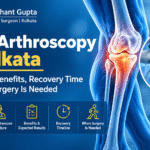
Knee pain can make everyday activities such as walking, climbing stairs, exercising or even sitting comfortably increasingly difficult. If your knee frequently swells, locks, feels unstable or does not improve with treatment, you may wonder whether surgery is necessary. One option an orthopaedic surgeon may consider is knee arthroscopy, a minimally invasive procedure used to diagnose and treat specific problems inside the knee joint.
However, not every knee problem requires surgery. Understanding the symptoms, underlying conditions and available treatment options can help you make an informed decision. This guide explains when knee arthroscopy may be recommended, what the procedure involves and what to expect during recovery.
What Is Knee Arthroscopy?
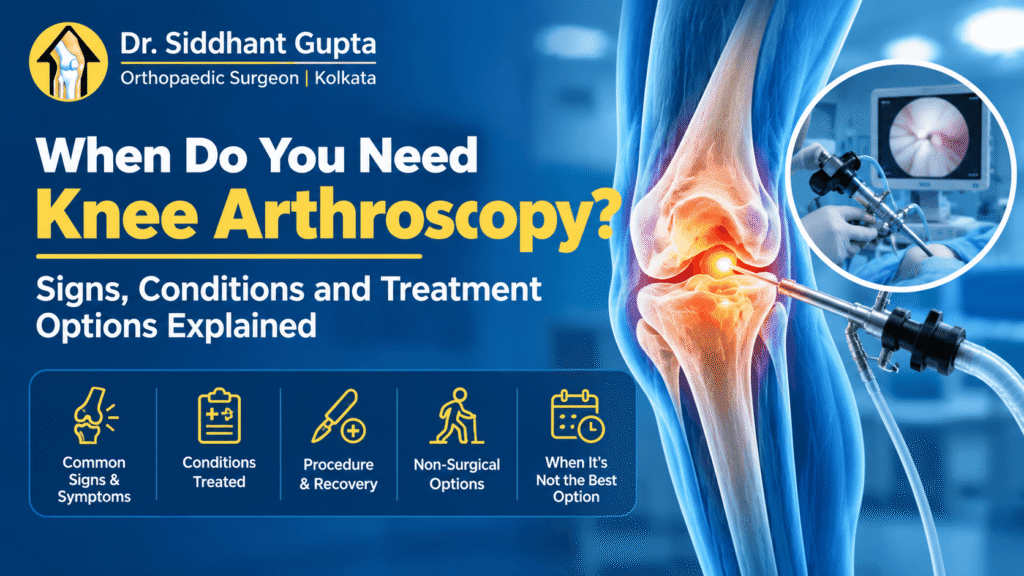
Knee arthroscopy is a minimally invasive surgical procedure that allows an orthopaedic surgeon to examine and treat problems inside the knee joint through small incisions. A thin instrument called an arthroscope contains a camera that transmits images of the joint to a monitor, helping the surgeon assess damaged structures and perform appropriate treatment.
Depending on the diagnosis, the surgeon may repair a torn meniscus, reconstruct a damaged ligament or remove loose fragments of cartilage or bone.
Compared with traditional open surgery, arthroscopy uses smaller incisions. However, its benefits and recovery time depend on the specific procedure performed and the patient’s condition.
7 Signs You May Need Knee Arthroscopy
Experiencing one or more of the following symptoms does not automatically mean you need surgery. These signs indicate that an orthopaedic assessment may be helpful, particularly when symptoms persist or interfere with daily activities.
1. Persistent Knee Pain
Knee pain that continues despite rest, activity modification or appropriate treatment may indicate an underlying structural problem. Pain that worsens during walking, squatting or climbing stairs can occur with meniscus injuries, cartilage damage and other knee conditions.
A clinical examination helps determine the cause and whether further investigations or surgical treatment may be appropriate.
2. Recurrent Swelling and Stiffness
Repeated swelling after physical activity or a knee injury may indicate inflammation or damage inside the joint. Stiffness can also make it difficult to bend the knee comfortably or straighten it fully.
If swelling repeatedly returns or does not improve, consult an orthopaedic specialist rather than assuming arthroscopy is necessary.
3. Knee Locking or Catching
A knee that becomes physically stuck or cannot fully straighten may have a mechanical problem, such as a displaced meniscus tear or a loose fragment inside the joint.
True locking deserves prompt medical assessment. Arthroscopy may help in selected cases by repairing damaged tissue or removing a loose fragment. Occasional clicking without pain or restricted movement, however, does not necessarily indicate a problem requiring surgery.
4. Knee Instability After an Injury
Does your knee feel as though it may give way while walking, turning or playing sports? This sensation can occur after an injury to the anterior cruciate ligament (ACL) or other stabilising structures.
Some ligament injuries can be managed without surgery, while others may require arthroscopic ligament reconstruction, depending on instability, activity requirements and associated damage.
5. Difficulty Bending or Straightening the Knee
Restricted movement may result from pain, swelling, stiffness or a mechanical obstruction within the joint. If you cannot fully bend or straighten your knee after an injury, an orthopaedic evaluation can help identify the underlying cause.
Sudden inability to move the knee should not be ignored.
6. Suspected Meniscus or Cartilage Damage
The meniscus is a specialised cartilage structure that cushions the knee and helps distribute weight. Twisting injuries during sports, exercise or everyday activities can cause a meniscus tear.
Depending on the type, location and severity of the tear, treatment may involve rehabilitation, meniscus repair or removal of a small portion of irreparably damaged tissue. When surgery is appropriate, preserving as much healthy meniscus as possible is generally preferred.
7. Symptoms That Persist Despite Conservative Treatment
If physiotherapy, activity modification and other appropriate non-surgical treatments have not improved your symptoms, further evaluation may be necessary.
Arthroscopy may be considered when symptoms are caused by a structural problem that can reasonably benefit from surgery. The decision depends on the diagnosis rather than pain intensity alone.
Which Conditions Can Knee Arthroscopy Treat?
Knee arthroscopy may be recommended for selected conditions, including:
Meniscus Tears
A meniscus tear may cause pain, swelling, catching or restricted movement. Depending on the tear’s location and characteristics, treatment may involve repairing the meniscus or removing unstable, damaged tissue when necessary.
ACL and Selected Ligament Injuries
An anterior cruciate ligament injury can cause knee instability, particularly during turning movements and sports. Selected patients may benefit from arthroscopic ACL reconstruction, depending on their symptoms, activity requirements and associated injuries.
Loose Bodies Inside the Knee
Small fragments of bone or cartilage can sometimes become loose inside the knee joint. These fragments may cause catching, locking or restricted movement. Arthroscopy may be used to remove them when clinically appropriate.
Selected Cartilage Injuries
Certain localised cartilage injuries may be treated using arthroscopic techniques. The appropriate procedure depends on the extent of the damage, the condition of the surrounding joint and the patient’s overall knee health.
Scar Tissue or Joint Inflammation
In selected cases, excessive scar tissue or problematic inflamed tissue may be treated arthroscopically when it causes significant symptoms and other treatments have not been sufficient.
When Is Knee Arthroscopy Not the Best Option?
Knee arthroscopy is not a universal solution for knee pain. Patients with advanced osteoarthritis, where the joint surfaces have significantly deteriorated, may not benefit from arthroscopy performed simply to relieve arthritis-related pain.
In these situations, treatment may include physiotherapy, strengthening exercises, weight management where appropriate, medication and other evidence-based options. Some patients with severe joint damage may eventually need an evaluation for knee replacement.
A torn meniscus also does not automatically require surgery. Many tears can initially be managed without an operation, depending on their characteristics and the symptoms they cause.
An orthopaedic surgeon can assess your condition and explain whether surgery, rehabilitation or another treatment approach is most suitable.
How Is Knee Arthroscopy Diagnosed and Performed?
Diagnosis Before Surgery
Before recommending surgery, an orthopaedic surgeon reviews your symptoms, medical history, injury mechanism and physical examination findings. X-rays may help identify bone changes or arthritis, while an MRI may be recommended to assess meniscus, ligament and cartilage injuries.
The need for imaging depends on the suspected condition and the clinical findings.
What Happens During Knee Arthroscopy?
If arthroscopy is appropriate, the procedure is usually performed under general or regional anaesthesia. The surgeon inserts the arthroscope through a small incision and uses specialised instruments through additional small incisions to carry out the planned treatment.
Many procedures are performed as day surgery, although individual circumstances may differ.
Potential Risks and Complications
Like any operation, knee arthroscopy carries potential risks, including infection, bleeding, blood clots, stiffness and persistent symptoms. Your surgeon should explain the expected benefits, limitations and alternatives before you decide.
Knee Arthroscopy Recovery Time and Rehabilitation
Recovery varies according to the procedure performed and the extent of the injury.
After a relatively minor arthroscopic procedure, some patients resume light activities within days. More complex procedures, such as meniscus repair or ACL reconstruction, generally require a longer rehabilitation period.
What to Expect During Recovery
- Pain and swelling management: Follow your surgeon’s instructions for rest, wound care and prescribed medication.
- Mobility support: Use crutches or a knee brace when advised.
- Physiotherapy: Follow a structured programme to restore movement, strength and balance.
- Gradual return to activities: Increase walking, exercise and other activities according to your recovery progress.
- Sports rehabilitation: Return to sports only when your surgeon and physiotherapist consider it appropriate.
Do not use a general recovery timeline to decide when you can resume strenuous activity. Recovery after ligament reconstruction or meniscus repair may take several months.
Seek urgent medical attention if you develop a fever with wound drainage, worsening severe pain, marked calf swelling or difficulty breathing after surgery.
Exploring Arthroscopy Treatment in Kolkata
If persistent knee pain, locking or instability is affecting your mobility, a timely assessment can help identify the cause and clarify your treatment options.
Dr. Siddhant Gupta is an MBBS, MS (Orthopaedics) consultant orthopaedic surgeon in Kolkata whose areas of expertise include arthroscopic surgery and treatment for ligament injuries and sports-related conditions.
Patients considering arthroscopy treatment in Kolkata can seek an assessment to understand their diagnosis, whether conservative treatment remains appropriate and whether a surgical procedure may offer meaningful benefits.
The aim is to select treatment based on the individual’s condition, functional needs and long-term joint health rather than recommending surgery for every case of knee pain.
To learn more about his orthopaedic services or enquire about a consultation, visit Dr. Siddhant Gupta’s official website.
Frequently Asked Questions About Knee Arthroscopy
When should I consider knee arthroscopy?
Consider an orthopaedic evaluation if persistent knee pain, recurrent swelling, true locking, instability or restricted movement affects your daily life. Arthroscopy may be appropriate if examination and investigations identify a condition that can benefit from surgery.
Can a meniscus tear heal without surgery?
Some meniscus tears improve with non-surgical treatment, including activity modification and physiotherapy. Others, particularly certain displaced or repairable tears, may require surgery. The decision depends on the tear pattern, symptoms and associated injuries.
Is knee arthroscopy a major surgery?
Knee arthroscopy is minimally invasive, and many procedures are performed as day surgery. Nevertheless, it remains a surgical procedure with potential risks. The complexity and recovery requirements depend on what treatment is performed.
How long does recovery take after knee arthroscopy?
Recovery may take days to several weeks for some minor procedures, while meniscus repair and ACL reconstruction can require several months of rehabilitation. Your surgeon can provide a more relevant estimate based on your procedure.
Does every knee injury require arthroscopy?
No. Many knee injuries improve with non-surgical treatment. Arthroscopy is considered when the diagnosis, symptoms and expected benefits justify surgery.
Conclusion
Recognising persistent knee pain, recurrent swelling, true locking and instability can help you seek appropriate treatment before the problem further affects your mobility. However, the need for surgery depends on the underlying diagnosis, not symptoms alone. An orthopaedic assessment can help determine whether physiotherapy, other conservative measures or surgery is the most appropriate approach.
If you are searching for Arthroscopy Treatment in Kolkata, Dr. Siddhant Gupta can assess your knee condition and discuss suitable treatment options.
Medical disclaimer: This article is for educational purposes and does not replace a clinical examination or personalised medical advice.