

- 9 Sep 2026
A bone fracture can happen suddenly due to a road accident, fall, sports injury, workplace accident, or even a minor fall in people with weakened bones. Depending on the location and severity of the injury, a fracture may cause pain, swelling, bruising, difficulty moving the affected area, or visible deformity.
Getting the right diagnosis and treatment early can help support proper bone healing and reduce the risk of complications. Fracture treatment in Kolkata may involve immobilisation with a cast or splint, realignment of the broken bone, or surgery in more complex cases. The appropriate treatment depends on factors such as the type and location of the fracture, bone alignment, soft-tissue damage, age, overall health, and other medical conditions.
Dr. Siddhant Gupta provides orthopaedic care for fractures and trauma-related conditions in Kolkata, including fracture fixation when surgical stabilisation is required.
What Is a Bone Fracture?
A fracture is a partial or complete break in a bone. Fractures can range from small cracks to complex breaks where the bone is divided into several pieces.
Some fractures are stable and can heal with immobilisation, while others may require the bone fragments to be repositioned and stabilised. An orthopaedic evaluation helps determine the appropriate approach.
Common Types of Bone Fractures
Understanding the type of fracture is important because treatment can vary considerably.
1. Closed Fracture
A closed fracture occurs when the bone breaks but does not penetrate the skin.
2. Open Fracture
An open fracture occurs when the broken bone or the injury creates an opening through the skin. These injuries require prompt medical attention because there is a higher risk of infection.
3. Displaced Fracture
In a displaced fracture, the broken bone fragments have moved out of their normal alignment. Depending on the degree of displacement and the affected bone, reduction or surgery may be necessary.
4. Comminuted Fracture
A comminuted fracture occurs when the bone breaks into multiple pieces. These fractures can be more complex to manage and may require surgical fixation.
5. Stress Fracture
Stress fractures are small cracks that can develop from repetitive stress, commonly affecting people involved in running or other repetitive activities. Early imaging may sometimes fail to show a stress fracture on an X-ray, so additional evaluation may be required when symptoms persist.
What Are the Symptoms of a Fracture?
The symptoms can vary depending on the location and severity of the injury. Common signs include:
- Sudden or persistent pain
- Swelling around the injured area
- Bruising or tenderness
- Difficulty moving the affected limb or joint
- Difficulty putting weight on the injured leg
- Abnormal shape or visible deformity
- Reduced movement
- Numbness or unusual sensation in some cases
A fracture cannot always be confirmed based on symptoms alone. If you suspect that you have broken a bone, medical assessment and appropriate imaging may be required.
How Are Bone Fractures Diagnosed?
Diagnosis usually begins with a physical examination. The doctor assesses pain, swelling, movement, deformity and the condition of the surrounding tissues.
Imaging Tests
An X-ray is commonly used to identify fractures and understand their location and alignment. In more complex injuries, a CT scan may provide more detailed images of the bone. MRI may also be considered in selected cases, particularly when certain injuries are not clearly visible on an X-ray.
The doctor may also consider the mechanism of injury, medical history and other factors before deciding on treatment.
Fracture Treatment Options
The goal of fracture treatment is to allow the bone to heal in an appropriate position while restoring function as safely as possible.
Immobilisation
For many fractures, immobilisation with a splint, cast, brace or sling may be sufficient. Keeping the broken bone stable can allow healing to take place.
A splint may initially be used when swelling is significant, with a cast or other form of immobilisation introduced later when appropriate.
Reduction
If the broken bone fragments are not properly aligned, the doctor may need to reposition them. This is known as reduction.
Depending on the injury and the patient’s condition, reduction may be performed without surgery or as part of a surgical procedure.
Fracture Surgery and Fixation
Not every fracture requires surgery. However, surgical treatment may be considered when the fracture is unstable, significantly displaced, involves a joint, has multiple fragments, or cannot be adequately maintained in the correct position with non-surgical treatment.
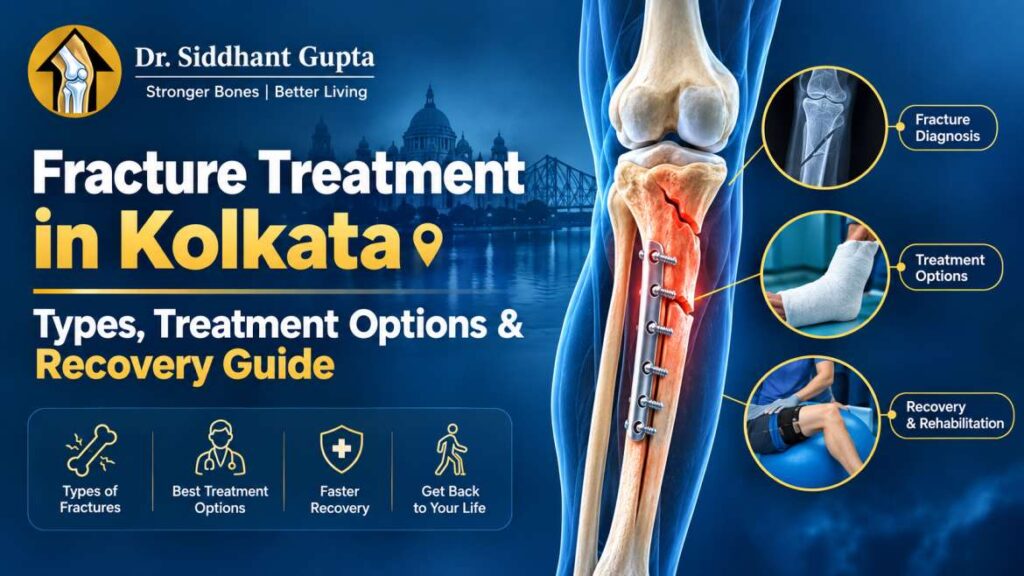
Fracture fixation may involve the use of plates, screws, nails, pins or other fixation devices to stabilise the bone while it heals.
The decision to recommend fracture surgery depends on the individual injury and the findings from clinical examination and imaging.
How Long Does a Fracture Take to Heal?
Fracture healing time varies from person to person. The location and severity of the fracture, age, overall health, bone quality, smoking status, nutrition and adherence to treatment can all influence recovery.
Some uncomplicated fractures may heal within several weeks, while complex fractures can take longer. For example, recovery from a broken leg may commonly take around 6–12 weeks, although some injuries require more time.
It is important not to assume that pain disappearing means the bone has completely healed. Follow-up appointments and imaging may be recommended to assess healing.
Recovery After Fracture Treatment
Recovery does not necessarily end when the bone is considered healed. After immobilisation or surgery, patients may experience stiffness, muscle weakness or reduced movement.
Depending on the injury, rehabilitation may include:
- Gradual restoration of movement
- Strengthening exercises
- Physiotherapy
- Gradual return to weight-bearing
- Activity modification
- Follow-up imaging
Rehabilitation should be progressed according to the doctor’s advice and the stage of bone healing. Physical therapy can help restore movement and strength after certain fractures.
When Should You See an Orthopaedic Doctor?
You should seek medical evaluation after an injury when you have significant pain, swelling, difficulty moving the affected limb, difficulty bearing weight, or a visible change in the shape of the limb.
Urgent medical attention is particularly important if:
- A bone appears to be protruding through the skin
- There is significant bleeding
- The limb appears severely deformed
- Fingers or toes become numb, pale, blue or unusually cold
- There is severe or worsening pain
- You suspect a serious injury following a major accident
An open fracture requires prompt treatment because the broken bone and surrounding tissues may be exposed to infection.
Fracture Treatment in Kolkata
If you are looking for fracture treatment in Kolkata, the appropriate treatment should be based on a detailed orthopaedic assessment rather than the type of injury alone.
Dr. Siddhant Gupta provides orthopaedic and trauma care in Kolkata, including fracture management and fracture fixation. His practice focuses on diagnosis, treatment planning and rehabilitation according to the patient’s individual condition.
Whether a fracture can be managed with immobilisation or requires surgical fixation depends on factors such as bone alignment, fracture complexity, soft-tissue involvement and overall health.
Frequently Asked Questions
Can every fracture be treated without surgery?
No. Some fractures heal well with a cast, splint or brace, while others may require reduction or surgical fixation. The decision depends on the fracture’s location, alignment, stability and severity.
When is fracture surgery necessary?
Surgery may be considered when a fracture is significantly displaced, unstable, involves a joint, has multiple fragments, or cannot be adequately maintained in the correct position through non-surgical treatment.
How long does a broken bone take to heal?
Healing time varies depending on the type and location of the fracture and the patient’s overall health. Some fractures heal within several weeks, while complex injuries may take considerably longer.
Can I walk after a leg fracture?
Whether you can put weight on a fractured leg depends on the type of fracture and the treatment provided. Weight-bearing should be resumed only according to your orthopaedic doctor’s advice.
What happens if a fracture is left untreated?
An untreated fracture may heal in an abnormal position or may not heal properly. Some fractures can also lead to stiffness, reduced function or other complications. Timely assessment is therefore important.
Conclusion
A fracture requires more than simply controlling pain. Proper diagnosis helps determine whether the injury can be managed with immobilisation or requires reduction, fracture surgery or fixation. Early assessment and appropriate follow-up can support proper healing and recovery.
If you have sustained an injury and suspect a broken bone, consult an orthopaedic specialist for an appropriate evaluation. For patients looking for fracture treatment in Kolkata, Dr. Siddhant Gupta provides fracture management and orthopaedic trauma care based on the nature and severity of the injury.