

- 24 Aug 2026
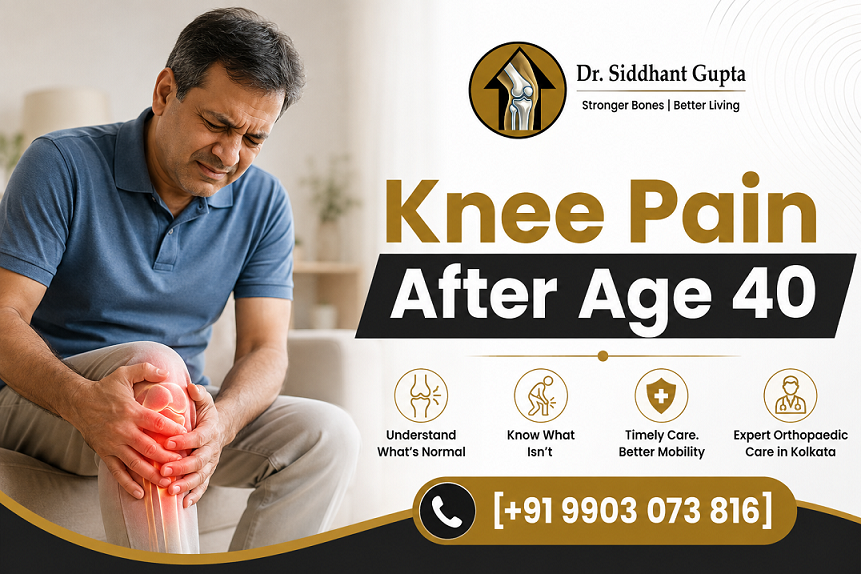
Knee discomfort can become more noticeable as we get older, especially after the age of 40. Occasional stiffness after prolonged sitting, discomfort after increased physical activity, or difficulty with certain movements may seem easy to overlook. However, persistent or recurring knee pain should not simply be considered a normal part of ageing.
Your knees play an important role in everyday movements such as walking, climbing stairs, sitting down and standing up. When knee pain starts affecting these activities, it may be time to understand what is causing it and whether you need professional evaluation from an orthopaedic doctor in Kolkata.
Is Knee Pain After 40 Always a Sign of a Problem?
Not necessarily. Some people may experience occasional knee discomfort or stiffness without having a serious underlying condition. However, the frequency, intensity and impact of the pain are important.
Pay attention to whether your knee pain:
- Keeps returning or gradually becomes more frequent
- Makes walking or climbing stairs difficult
- Interferes with your normal daily activities
- Is accompanied by persistent stiffness or difficulty moving the knee
- Continues despite taking adequate rest
Rather than focusing only on your age, it is more important to understand how the pain is affecting your movement and quality of life.
Knee Pain While Climbing Stairs: Should You Be Concerned?
One situation many people notice is knee pain while climbing stairs. If you find yourself experiencing discomfort specifically while going up or down stairs, it is worth paying attention to.
The Dr. Siddhant Gupta Orthopaedic blog specifically addresses knee pain while climbing stairs and the possible causes and treatment options. This type of activity-related pain can be a useful reason to seek an orthopaedic evaluation, particularly when it keeps recurring or starts limiting your everyday activities.
You do not necessarily need to wait until the pain becomes severe before consulting a specialist.
What Knee Pain After 40 Should You Not Ignore?
Persistent pain deserves more attention than occasional discomfort.
You should consider consulting an orthopaedic specialist if your knee problem is affecting your ability to walk, climb stairs, exercise, work or carry out routine activities.
Similarly, recurring knee discomfort that progressively affects your mobility should not be dismissed simply as “getting older.”
An orthopaedic assessment can help identify the underlying problem and determine what type of care may be appropriate.
Why Early Evaluation Can Make a Difference
Knee problems can affect more than just the knee itself. When pain changes the way you walk or move, everyday activities may gradually become more difficult.
The goal of orthopaedic care is not simply to address pain. It is also to help patients maintain mobility and return to their normal activities wherever possible.
Dr. Siddhant Gupta’s approach focuses on accurate diagnosis and personalised treatment based on the patient’s condition, lifestyle and functional requirements.
Depending on the underlying problem, orthopaedic treatment may involve conservative management, rehabilitation and physiotherapy guidance, or procedures such as arthroscopy or joint replacement when clinically appropriate.
Does Every Knee Problem After 40 Require Surgery?
No.
Experiencing knee pain does not automatically mean that you need surgery. The appropriate treatment depends on the underlying condition, severity of symptoms, functional limitations and individual patient requirements.
An experienced orthopaedic surgeon can assess the problem and recommend an appropriate treatment pathway rather than assuming that every patient requires the same approach.
This is particularly important because two people of the same age can experience very different knee problems and may require completely different treatment plans.
When Should You See an Orthopaedic Doctor in Kolkata?
Consider seeking an orthopaedic evaluation when knee pain:
- Becomes persistent or recurrent
- Starts affecting your walking or mobility
- Makes climbing stairs difficult
- Interferes with everyday activities
- Gradually becomes more difficult to manage
Getting evaluated does not mean you will automatically need surgery. It simply helps you understand what may be causing the problem and what treatment options may be suitable.
For patients looking for orthopaedic treatment in Kolkata, Dr. Siddhant Gupta provides care across areas including joint replacement, arthroscopy, sports injuries, trauma and fracture care, and joint pain management.
Frequently Asked Questions
Is knee pain after 40 normal?
Occasional knee discomfort can occur, but persistent or recurring pain should not automatically be considered a normal part of ageing. If it affects your movement or daily activities, consider an orthopaedic evaluation.
When should I see an orthopaedic doctor for knee pain?
You should consider consulting an orthopaedic doctor when knee pain keeps returning, affects your mobility, makes activities such as climbing stairs difficult, or begins interfering with everyday life.
Does knee pain after 40 always require surgery?
No. Treatment depends on the underlying problem and its severity. Depending on the condition, treatment may include conservative management, rehabilitation, physiotherapy guidance or surgical options when appropriate.
How can I find the best orthopaedic surgeon in Kolkata for knee problems?
Look for an orthopaedic surgeon whose expertise and treatment approach match your specific condition. A proper clinical evaluation is an important first step before deciding on any treatment.
Don’t Ignore Persistent Knee Pain
Turning 40 does not mean you have to accept ongoing knee pain as an unavoidable part of ageing. Occasional discomfort may not always indicate a serious problem, but persistent or recurring pain that affects your movement deserves attention.
The earlier you understand the reason behind your knee pain, the sooner you can discuss appropriate treatment and ways to protect your mobility.
If knee pain is interfering with your daily life, consult an experienced orthopaedic doctor in Kolkata for an appropriate evaluation and personalised treatment plan.
Dr. Siddhant Gupta provides comprehensive orthopaedic care with a focus on personalised treatment, mobility and recovery.