


- 28 Sep 2026
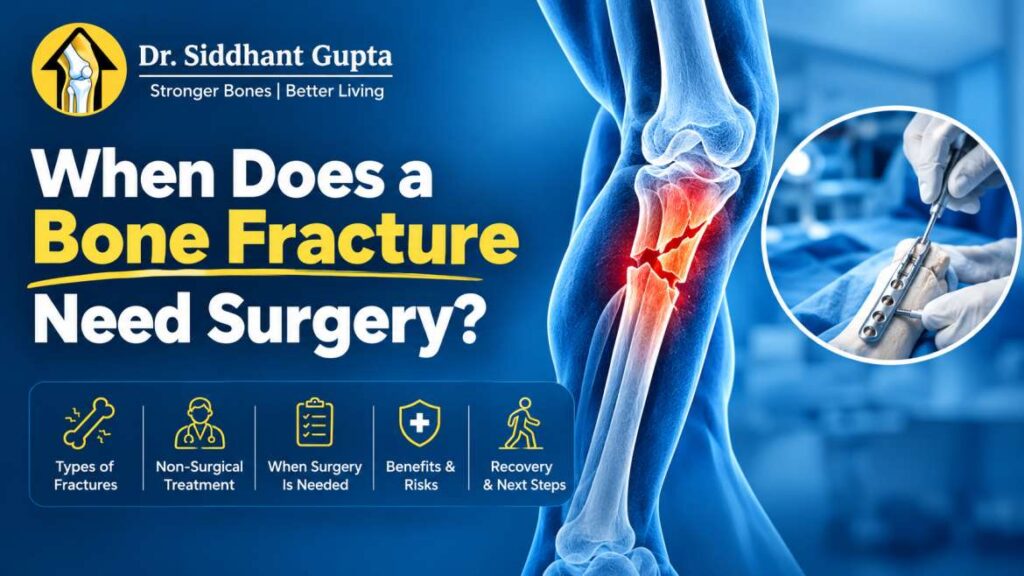
A bone fracture does not always require surgery. Many simple fractures can heal with a cast, splint, brace, or other forms of non-surgical treatment. However, some fractures are more complex and may need surgical intervention to restore proper bone alignment and stability.
Understanding when fracture surgery may be recommended can help patients make informed decisions about their treatment. The need for surgery depends on several factors, including the type and location of the fracture, the position of the broken bone fragments, damage to surrounding tissues, and whether the fracture can remain stable during healing.
If you are looking for fracture treatment in Kolkata, an orthopaedic specialist can evaluate the injury through physical examination and appropriate imaging before recommending a treatment plan.
What Is Fracture Surgery?
Fracture surgery is a procedure used to realign and stabilise broken bones when non-surgical treatment may not provide adequate results.
During fracture fixation, an orthopaedic surgeon may use medical devices such as:
- Plates and screws
- Intramedullary nails
- Pins or wires
- External fixation devices
The choice of fixation method depends on the type and location of the fracture.
The primary goal is to restore appropriate alignment and provide stability so that the bone can heal properly while helping the patient regain function.
When Does a Bone Fracture Need Surgery?
Not every fracture requires an operation. However, surgery may be considered in certain situations.
1. The Bone Is Significantly Displaced
A displaced fracture occurs when the broken pieces of bone have moved out of their normal position.
If the fragments cannot be adequately aligned or are likely to move again after reduction, surgical fixation may be recommended.
2. The Fracture Is Unstable
Some fractures are difficult to keep in the correct position using a cast or brace alone.
If the bone is likely to shift during healing, surgical stabilisation may help maintain alignment.
3. The Fracture Involves a Joint
Fractures that extend into a joint may require careful treatment because improper alignment can affect joint movement and function.
Depending on the fracture pattern, surgery may be recommended to restore the alignment of the joint surface.
4. It Is an Open Fracture
An open fracture occurs when there is an open wound associated with the broken bone.
These injuries require urgent medical assessment because bacteria can enter through the wound, increasing the risk of infection. Treatment may involve wound management, antibiotics when medically indicated, and surgical procedures depending on the injury.
5. The Bone Is Broken Into Multiple Pieces
A comminuted fracture occurs when a bone breaks into several fragments.
These fractures can be more challenging to manage with a cast alone. Depending on the location and stability of the injury, surgical fixation may be required.
6. The Fracture Does Not Heal Properly
Some fractures may fail to heal as expected. This can result in conditions such as delayed union or non-union.
In selected cases, further treatment, including surgery, may be considered to help achieve bone healing.
What Happens During Fracture Fixation Surgery?
The exact surgical technique varies according to the fracture.
Generally, the surgeon first assesses the fracture using imaging and plans how the bone fragments should be positioned.
During surgery, the bone fragments may be carefully realigned. This is called reduction. The bone is then stabilised using an appropriate fixation device.
For example, plates and screws may be positioned along the bone, while certain long-bone fractures may be treated using an intramedullary nail placed inside the bone.
The objective is to provide sufficient stability while the bone undergoes the natural healing process.
Fracture Surgery vs Non-Surgical Treatment
A common question patients have is whether surgery is better than a cast or other non-surgical treatment.
There is no single treatment that is suitable for every fracture.
Non-Surgical Treatment
Depending on the injury, treatment may include:
- Cast or splint
- Brace or sling
- Activity modification
- Follow-up imaging
- Physiotherapy or rehabilitation
This approach may be appropriate for fractures that are stable and properly aligned.
Surgical Treatment
Surgery may be recommended when the fracture cannot be adequately aligned or stabilised through non-surgical methods.
The decision depends on the fracture pattern, location, alignment, stability, soft-tissue condition and the patient’s overall health.
An orthopaedic doctor will consider these factors before recommending surgery.
How Is It Decided Whether Surgery Is Necessary?
The decision usually starts with a clinical examination and imaging.
X-Ray
X-rays are commonly used to identify fractures and assess their location and alignment.
CT Scan
A CT scan can provide more detailed information about complex fractures, particularly when a fracture involves a joint or contains multiple fragments.
Physical Examination
The doctor also assesses swelling, movement, tenderness, circulation, sensation and the condition of the surrounding tissues.
The patient’s age, activity level, medical history and other health factors may also influence treatment planning.
How Long Does It Take to Recover After Fracture Surgery?
Recovery after fracture surgery varies significantly.
Factors that can influence recovery include:
- Type and location of the fracture
- Severity of the injury
- Surgical technique used
- Age and overall health
- Bone quality
- Presence of other medical conditions
- Rehabilitation and follow-up
Some patients may begin controlled movement relatively soon after surgery, while others may need a longer period of protection before putting weight on or using the affected limb.
It is important to follow the orthopaedic surgeon’s instructions regarding activity, weight-bearing and rehabilitation.
What Is the Role of Physiotherapy After Fracture Surgery?
Bone healing and functional recovery are related but not always identical.
After a period of immobilisation or surgery, patients may experience stiffness, reduced muscle strength and limited movement. Physiotherapy may be recommended to gradually improve mobility, strength and function.
The rehabilitation programme depends on the fracture, surgical procedure and stage of healing.
Patients should not return to strenuous activities or sports until their treating healthcare professional considers it appropriate.
Can a Fracture Heal Without Surgery?
Yes, many fractures can heal without surgery.
Stable fractures with acceptable alignment may often be managed with immobilisation and follow-up care. However, some fractures may initially appear manageable but later lose alignment.
Regular follow-up is therefore important to monitor the healing process and determine whether treatment needs to be adjusted.
When Should You See an Orthopaedic Doctor?
After a significant injury, medical assessment is important if you experience symptoms such as:
- Severe or persistent pain
- Significant swelling
- Difficulty moving a limb
- Inability to put weight on the affected leg
- Visible deformity
- Numbness or unusual sensation
- An open wound near a suspected fracture
A suspected open fracture, severe deformity, significant bleeding, or changes in the colour, temperature or sensation of the affected limb requires urgent medical attention.
Fracture Treatment in Kolkata
If you are searching for fracture treatment in Kolkata, choosing the appropriate treatment should begin with an accurate diagnosis.
Dr. Siddhant Gupta provides orthopaedic care for fractures and trauma-related conditions, including fracture fixation when surgical stabilisation is considered appropriate.
The treatment plan is based on the patient’s fracture pattern, imaging findings, overall health and functional requirements. Surgery is recommended only when it is considered appropriate for the individual injury.
Early evaluation can help determine whether a fracture can be treated conservatively or whether surgical fixation may be required.
Frequently Asked Questions
Does every broken bone require surgery?
No. Many fractures can heal with a cast, splint, brace or other non-surgical treatment. Surgery is generally considered when the fracture cannot be adequately aligned or stabilised through conservative treatment.
How do I know if my fracture needs surgery?
The need for surgery cannot usually be determined from symptoms alone. An orthopaedic examination and imaging such as X-rays, and sometimes CT scans, are used to assess the fracture.
Is fracture surgery always performed with plates and screws?
No. Different fixation methods are available, including plates and screws, intramedullary nails, pins, wires and external fixation. The appropriate method depends on the fracture.
How long does fracture surgery recovery take?
Recovery varies according to the fracture and treatment. Bone healing may take several weeks or longer, while complete functional recovery can take additional time.
Can a displaced fracture heal without surgery?
Some displaced fractures may be realigned without surgery, depending on their location and stability. If the fracture cannot maintain acceptable alignment, surgical fixation may be considered.
Conclusion
A bone fracture does not automatically mean that surgery is necessary. Many stable fractures can heal successfully with appropriate non-surgical treatment. However, significantly displaced, unstable, complex, open or joint-involving fractures may require surgical fixation.
The decision should be based on a proper orthopaedic assessment, imaging findings and the individual patient’s circumstances. If you have sustained an injury and suspect a fracture, timely medical evaluation can help determine the most appropriate treatment approach.
For patients seeking fracture treatment in Kolkata, consulting an experienced orthopaedic specialist can help establish an appropriate diagnosis, treatment plan and follow-up strategy.