


- 27 Jul 2026
Pain on the outer side of your elbow that doesn’t seem to go away can make even the simplest daily tasks difficult. Whether you’re lifting a cup of coffee, typing on a keyboard, or shaking someone’s hand, persistent elbow pain may be a sign of tennis elbow, medically known as lateral epicondylitis.
Many people initially try home remedies such as rest, ice packs, or pain-relieving gels. While these treatments may provide temporary relief, they are not always enough—especially if the condition has progressed.
In this blog, we’ll explain what tennis elbow is, why home remedies sometimes fail, and the most effective tennis elbow treatment options available today.
What Is Tennis Elbow?
Tennis elbow is a painful condition caused by repetitive stress on the tendons that connect the forearm muscles to the outer part of the elbow. Despite its name, you don’t have to play tennis to develop it.
Anyone who repeatedly uses their forearm muscles can develop tennis elbow, including:
- Office workers
- Plumbers
- Electricians
- Carpenters
- Painters
- Gardeners
- Mechanics
- Gym enthusiasts
- Badminton and squash players
The repeated strain causes tiny tears in the tendon, leading to pain, inflammation, and reduced grip strength.
Common Symptoms of Tennis Elbow
The symptoms usually develop gradually and may worsen over time.
Common signs include:
- Pain on the outside of the elbow
- Weak grip strength
- Pain while lifting objects
- Difficulty opening jars or bottles
- Pain while shaking hands
- Discomfort during typing or writing
- Pain that increases with repetitive arm movements
If these symptoms persist for several weeks, it is important to consult a tennis elbow doctor for proper evaluation.
Can Home Remedies Help?
For mild cases, home care can reduce pain and allow the tendon to heal.
Common home remedies include:
- Resting the affected arm
- Applying ice packs for 15–20 minutes
- Using an elbow brace or support strap
- Avoiding repetitive activities
- Taking anti-inflammatory medications as advised by a doctor
- Gentle stretching exercises
Many patients experience improvement within a few weeks. However, if symptoms continue despite these measures, further treatment may be required.
When Are Home Remedies Not Enough?
Home remedies may no longer be effective if:
Pain Lasts More Than Six Weeks
Persistent pain often indicates that the tendon has not healed properly.
Daily Activities Become Difficult
If lifting groceries, typing, driving, or holding objects becomes painful, professional treatment is recommended.
Grip Strength Is Getting Weaker
Weakness in the hand or forearm suggests that the tendon injury may be worsening.
Pain Keeps Returning
If the pain improves temporarily but returns whenever you resume normal activities, the underlying problem has not fully healed.
You Have Severe Pain Even at Rest
Pain that continues even when you’re not using your arm may indicate more significant tendon damage.
Ignoring these symptoms may prolong recovery and increase the risk of chronic tendon degeneration.
How Is Tennis Elbow Diagnosed?
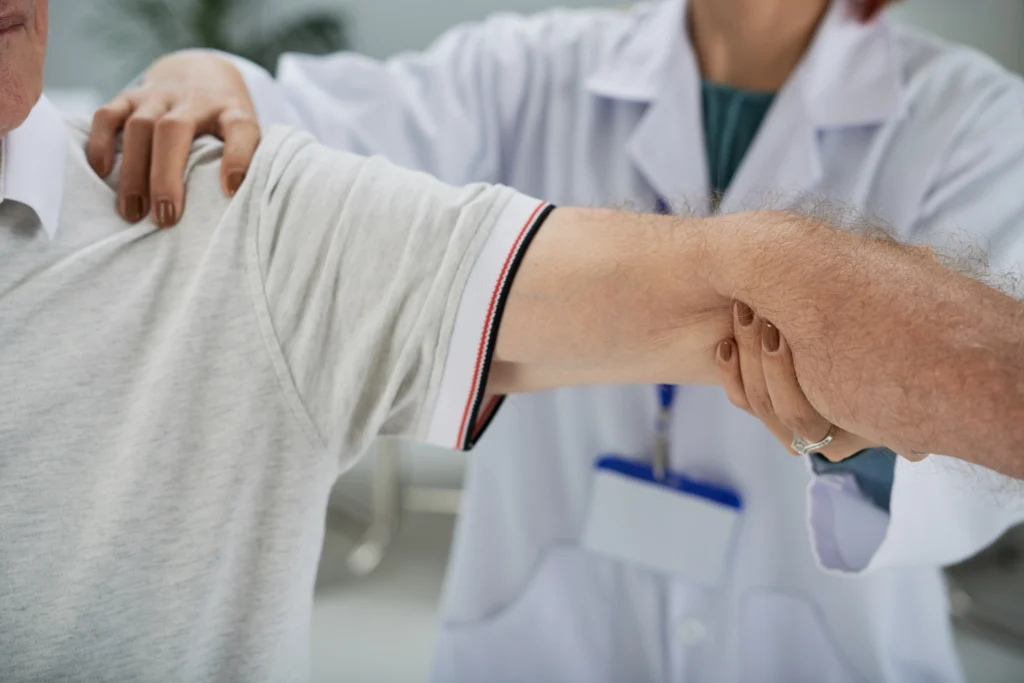
An orthopaedic surgeon usually diagnoses tennis elbow through:
- Detailed medical history
- Physical examination
- Assessment of pain during specific movements
- Grip strength testing
If necessary, imaging studies such as X-rays, ultrasound, or MRI may be recommended to rule out other conditions like arthritis, ligament injuries, or fractures.
Effective Tennis Elbow Treatment Options
The best treatment depends on the severity of the condition and how long you’ve had symptoms.
1. Physiotherapy
Physiotherapy is often the first-line treatment for persistent tennis elbow.
It focuses on:
- Strengthening forearm muscles
- Improving flexibility
- Correcting movement patterns
- Reducing tendon stress
- Preventing recurrence
A structured rehabilitation programme can significantly improve pain and function.
2. Medications
Non-steroidal anti-inflammatory drugs (NSAIDs) may help reduce pain and inflammation. These should be taken only under medical supervision.
3. Elbow Braces
A counterforce brace helps reduce pressure on the injured tendon during daily activities.
While braces relieve symptoms, they do not cure the condition.
4. PRP (Platelet-Rich Plasma) Therapy
In selected patients, Platelet-Rich Plasma (PRP) injections may promote tendon healing by using the patient’s own growth factors.
PRP is often considered for chronic tennis elbow that has not responded to conservative treatment.
5. Corticosteroid Injections
Steroid injections can provide temporary pain relief by reducing inflammation.
However, repeated steroid injections are generally avoided because they may weaken the tendon over time.
6. Tennis Elbow Surgery
Surgery is recommended only when symptoms persist despite several months of non-surgical treatment.
The procedure involves removing damaged tendon tissue and repairing healthy tissue.
Modern surgical techniques, including minimally invasive procedures, usually allow faster recovery and rehabilitation.
Recovery After Tennis Elbow Treatment
Recovery time depends on the severity of the condition and the treatment received.
- Mild cases may improve within 6–8 weeks.
- Moderate cases often require 2–4 months of physiotherapy.
- Patients undergoing surgery generally recover over 3–6 months, followed by rehabilitation exercises.
Following your doctor’s instructions and completing physiotherapy are essential for a successful recovery.
How Can You Prevent Tennis Elbow?
Although not every case can be prevented, these simple habits can reduce your risk:
- Warm up before sports or exercise.
- Strengthen your forearm muscles regularly.
- Maintain proper posture while working.
- Use ergonomic keyboards and tools.
- Take regular breaks during repetitive tasks.
- Lift objects using proper technique.
- Avoid sudden increases in workload or sports intensity.
Small lifestyle changes can go a long way in protecting your elbows from repetitive strain injuries.
When Should You See a Tennis Elbow Doctor?
Consult an orthopaedic specialist if:
- Your elbow pain lasts longer than six weeks.
- Home remedies are not helping.
- You have difficulty gripping or lifting objects.
- Pain interferes with work or sports.
- You experience swelling or increasing weakness.
- The pain keeps returning after temporary improvement.
Early diagnosis can prevent chronic tendon damage and help you return to your normal activities sooner.
Why Choose Dr. Siddhant Gupta for Tennis Elbow Treatment?
Persistent elbow pain deserves expert evaluation. Dr. Siddhant Gupta offers comprehensive diagnosis and personalised treatment plans for tennis elbow and other sports-related injuries. He practices in 4 well known hospitals of Baranagar area in Kolkata, e.g., Binayak Hospital, Niramaya Nursing Home, Charnock Lohia Hospital and Mayfair Hospital.
Depending on your condition, treatment may include conservative management, physiotherapy guidance, minimally invasive procedures, or surgical intervention when required. The goal is always to relieve pain, restore function, and help you return to your daily routine safely.
Conclusion
Home remedies are often effective for mild tennis elbow, but they are not always enough. If your pain persists, worsens, or starts affecting your daily life, it’s time to seek professional medical care.
Early diagnosis and the right tennis elbow treatment can prevent long-term complications, improve recovery, and help you regain strength and mobility. Don’t ignore persistent elbow pain—consult an experienced orthopaedic surgeon to receive the treatment that’s right for you.
Frequently Asked Questions (FAQs)
1. What is the best treatment for tennis elbow?
Most patients improve with physiotherapy, activity modification, medications, and elbow braces. Chronic cases may require PRP therapy or surgery.
2. How long does tennis elbow take to heal?
Mild cases may recover within 6–8 weeks, while chronic cases can take several months depending on the severity and treatment.
3. Can tennis elbow heal without surgery?
Yes. Most people recover with non-surgical treatments such as physiotherapy, rest, and lifestyle modifications. Surgery is reserved for persistent cases.
4. When should I see a tennis elbow doctor?
You should consult a doctor if pain lasts longer than six weeks, affects daily activities, or doesn’t improve with home care.
5. Is tennis elbow caused only by playing tennis?
No. Repetitive activities such as typing, painting, carpentry, plumbing, gardening, and lifting can also cause tennis elbow.
6. Can physiotherapy cure tennis elbow?
Physiotherapy is one of the most effective treatments for tennis elbow. It helps strengthen the forearm muscles, improve flexibility, and reduce stress on the injured tendon.
7. What happens if tennis elbow is left untreated?
Untreated tennis elbow can lead to chronic pain, reduced grip strength, tendon degeneration, and difficulty performing everyday tasks.